Cha Cha Cha Chaaaanges….
Reply

I was prompted by a friend to read the book, The Tyranny of Guilt: An Essay on Western Masochism by Pascal Brunckner, which reflects on the problem the West finds itself in as it wallows in the sins of its past to the point of becoming ineffectual against the problems of the present and the future. Bruckner argues that guilt has become a pathology, and indeed, it seems in many respects he is correct. As the West battles internally with its demons – one side refusing to acknowledge them at all and the other side consumed with guilt over it – out there lay other evils and challenges that are not going to wait for us to get our collective shit together.
We have monumental mistakes in our past; slavery, the holocaust, genocide, economic injustices, wars, subjugation of women, homophobia. The list goes on and much of it is still going on in our times. There’s lots to feel guilty about if we’re so inclined to it. Bruckner makes the case that this is counterproductive. Guilt makes us silent and less likely to step in when we see other cultures making the same mistakes we did. We call it moral relativism (not to be confused with cultural relativism), but really, it’s our own guilt over these past sins that keeps us from interfering. When I taught Ethics, I would have students ardently defending the practice of female genital mutilation because it was the practice of a particular culture and “who am I to judge?” My response was often, “You are a rational, thinking, human being, tell me what you think of this practice.” They had a hard time with it. They found it abhorrent and knew it harmed girls and women, but they couldn’t bring themselves to say it was wrong for another culture. “Let’s try this again,” I would say. “Would it have been okay for the Nazis in Germany to only kills the German Jews? Did it only become a problem when they invaded other nations and killed those Jews too?” Sometimes the light would go on then that there was a problem in their relativism. Sometimes not.

I am finding more and more that there is a cultural guilt in Western society that keeps it from acting on great problems. “Who are we to make those decisions?” seems to be the motif among a growing contingent. And as a backlash in the opposite direction, we have the growing shadow of those refusing to even acknowledge the past. The “I’m not responsible for what happened a century ago!” crowd. On the other side of guilt breeds the Shadow. These are those people disgusted by the acquiescence and silence of those who have succumb to the guilt. In their plight not to be associated with the weak ineffectiveness of their counterparts, they cause all sorts of chaos. These are the two sides of the malignant guilt coin.

Perhaps we are witnessing the legacy of a culture built on the redemptive aspect of suffering. Christianity as it is practiced today, is built on the idea that suffering is good for us. We find in our suffering that there is salvation at the end of the tunnel. In this sense, there is a self-serving aspect of it. We can cleanse ourselves of our sins – not by correcting our mistakes and growing from them – but rather through suffering in-and-of-itself. Atonement via flagellation.
Guilt, then, is inherently selfish. I don’t know many groups who have suffered under White European oppression that want our guilt in response to their own suffering. Our guilt leads to worse things, like our projections of what we think oppressed groups want us to do to fix the world rather than actually doing anything to fix the world. Say for instance, by truly inviting these oppressed people to the table to make changes together, rather than us making the changes we think they want on their behalf. No matter how much we say we want to help Black people and indigenous cultures, people of color, and women, a ridiculous disproportionate amount of all political power and commerce is still controlled by White men of European descent.
Our precious guilt redirects the suffering back onto ourselves, rather than the harmed Other. It is the roundabout racism of liberalism found in white European culture that we don’t want to address. Freedom for all! But not in our backyard! Let us lament the struggle and our failures, and all the work ahead of us! This is our great burden! This is the proverbial black mirror that is all too terrible to look into. Suffering for the greater glory, even in a secular context, is a special kind of narcissistic evil.

If we want to build a better world, it’s time to exorcise the guilt and integrate that shadow before we consign ourselves to a worse fate. How do we do that? We face our past mistakes, not with guilt but with action. We stop tolerating those behaviors that are wrong in ourselves and in others. We stop hemming and hawing and get on with it. We dare to grow from the past and stop wallowing in it. We stop making the victims of our atrocities and mistakes, the victims of our guilt also. We opt for true diversity of opinions on how to move forward in our world by embracing what helps us all, rather than the disingenuous apology after the plundering of resources.
There are other evils out there and wallowing in guilt will not allow us to defeat those. The West is not the only problematic culture and there’s plenty of shitty behavior to go around. We are facing monumental problems in our future, not the least of those is climate change which is bound to change the political, social and spiritual landscape radically. To meet the challenges, we will need to grow up, face reality and meet it head on.
I was considering today what the world would be like if the literalist Christians, who so missed the message of personal transformation and awakened consciousness, hadn’t become the the dominant religion in our world today. Would we still be a pagan society? Would an eclectic spiritual practice be the norm? Would some other type of monotheistic religion have risen up to fill the void? How would that have shaped our political, social and technological landscape?

In his book, Caeser’s Messiah, Joseph Atwill makes the argument that Christianity in it’s literal interpretation, was invented by the Romans with the help of the Jewish scholar turned Roman citizen, Josephus. In Atwill’s argument, the Romans, under the auspices of the Flavian emperors, Vespasian, Titus and Domitian, did this as a means to control the Jewish population so that they would be more easily ruled. Jewish zealots were a major pain in the ass to the Roman Empire, so a religion that tells them to love each other, turn the other cheek, there is a better life waiting for them after they die, and so on, makes some amount of sense. Josephus, according to the theory, is there to make sure that they can encode the beliefs and morals of the new religion with Jewish culture and tradition. Atwill makes an interesting case and I do think that his theory is worth thinking about, even if I question some of his scholarship and conclusions.
For instance, early Christian-Jews did a really shitty job of converting Jews over to it. The main Jewish community wanted little to do with them. I imagine they were pretty over messiahs by then. They were super successful at converting the very people they really didn’t want to convert; gentiles. They were so successful at converting gentiles, that pretty soon there were more gentile Christians than Christian-Jews and eventually the Christian-Jews were kicked out of Christianity.
If this was a Roman plot, it had a lot of problems. Though that doesn’t mean it didn’t happen. All sorts of bad ideas backfire in spectacular ways.
It’s been a few years since I read the book, but I’ve been reading more on the Gnostics and it occurred to me while doing my research that Atwill may still be on to something. It’s long been held that the Gnostic Christians were a branch of Christianity that came after the emergence of Christianity. While Gnosticism as a Pagan branch existed before either of them, the Christian version arose in response and criticism of mainstream Christianity. But I’m starting to think, based on more research, that isn’t true. It doesn’t even make sense to me. I think it’s quite possible that Christian Gnosticism came before Christian literalism as perhaps just a local Jewish version of Gnosticism (Timothy Freke and John Lamb Lush make this point in their books). The Romans may have then used some of the Gnostic stories to create the life and death of Jesus Christ into a single coherent narrative. In doing so, they systematically cut out a lot of the bits that empowered people like women, the poor and slaves. They wove a theology that treated the story as a literal truth rather than a more powerful symbolic truth that taught people how to tap into their own consciousness and divine power.
Why would the Romans do that? The same reason public education is pretty shitty today. They want drones to build empires, they don’t want free-thinkers. A few here and there is okay, they are needed to invent things and move technology forward. But masses of them? No way! There’s a reason psychedelic drugs are outlawed today and it’s not to protect us. The Romans were trying to control a vast empire and Gnosticism in it’s various forms was all over Alexandria and spreading out.

Late antiquity scholar, Candida Moss, did a good job in her book, The Myth of Persecution: How Early Christians Invented a Story of Martyrdom, showing how systematic persecution of the early Christians just never happened. There are records of Roman procurators and centurions sending would-be martyrs home, confused by the offer they made to die for their god. Though I guess it was nice to know that should there be a war, some people were ready to just give up and die. By the time Flavius Valerius Constantinus came around, Christianity spread so far and wide that he had the one thing that would surely unite the Roman Empire for him – a single religion that didn’t rely on one’s ethnicity. Anyone could be a Christian regardless of where they were born. This was new in the world, and he used it to breath new live into the empire that had grown too big for it’s own good. He became Constantine, legalized the practice of Christianity in 313, and within the same century it became the state religion of Rome. By 325 the Council of Nicaea codified Christianity and soon any Christian branch outside of that pack is labelled heretical and systematically eradicated.
So, I have been wondering of late if Rome may have actually played a stronger hand than we’ve been aware of in the shape of the world today. It makes me think of the words of Phillip K. Dick, “THE EMPIRE NEVER ENDED.”
Perhaps not.

“We choose to go to the Moon in this decade and do the other things, not because they are easy, but because they are hard, because that goal will serve to organize and measure the best of our energies and skills, because that challenge is one that we are willing to accept…”
John F. Kennedy, September 12, 1962
Just this week I’ve been bombarded by well-meaning relatives and friends sending me pro-Trump ad and other various propaganda videos. I’ve also overheard co-workers speaking about their new pro-Trump paraphernalia to put out on their lawns and how they hope he can get this country back on the right track and… I really don’t want to hear it. I do not like this man and I certainly do not relish the idea of four more years of him. I’m not sure America can survive four more years of him.
But if you happen to live in America, hear about him you must as we all do. Every. Single. Day. I imagined this election cycle would be exhausting back in 2016 if Trump managed to remain in office. But on top of out-of-control coronavirus, mask wars, well-justified Black Lives Matters protests, DHS goons being sent into our cities, and Trump at the center of all of it like some mad conductor leading a group of hyenas on kazoos playing All Hail the Conquering Hero – I’m not sure how much more of this I can take.
But with little choice in the matter, I’ve chosen to focus on a positive aspect of the Trump administration. What could that possibly be? He’s introduced America to its shadow side.
All of the hate, the racism, the misogyny, the xenophobia, the religious hatred, is hanging out for everyone to see. All of the problems plaguing America; the cracks in the system, the loop-holes in our democracy, the institutional blindness towards people in need, the gerrymandering in the voting system, the theft from the social safety networks are now exposed to us. It was always there. Trump didn’t cause it, he just shined a large enough light on it for all of us to see the rot that was growing there. Our history is both great and terrible. Where we have excelled, we must remember that this nation accomplished its great deeds on the backs of slaves and through the genocide of the indigenous culture. This is a time for our nation to sit with these realities and actually work through them rather than ignore them. If we are to ever heal these wounds, we need to stop pretending that we have nothing to do with our own past. As Antonio tells Sebastian in The Tempest, “What’s past is prologue.” Everything in our history has led us to this point. But how we choose to act right now at this moment, can change things for the better or the worse.
When I was studying archaeology as an undergrad, my professor gave me an old iron artifact covered in rust from the 19th century to clean with a sandblaster. To this day, I don’t know what it was. It was mostly rust by the late 20th century when I got my hands on it. As I used the sandblaster to remove the rust, it gradually became apparent that whatever it was, the rust was all that was holding it together. My heart sank as the object split into four pieces. They were shiny though! If we melted it down, we could have used the pieces to make it into something else. Alas it was not a metal recycling class, it was archaeology. My job was to preserve the useless thing. When my professor saw it he simply replied, “Ah, shit.”

I sometimes get the feeling that America is now being hit by a giant karmic sandblaster. It’s a grueling process, but we’re slowly stripping the rust and rot away. Maybe beneath it there are some shiny nuggets for us to recover and make into something new. Rather than being archaeologists and preserving the old, decaying, rusted, rotting legacy that we’ve held onto so tightly for so long, we need to instead become the alchemists who burn away the dross, refine what is left and make alchemical gold.
Solve et Coagula
My work this election year is shadow work. It is not easy. It is why it is called The Great Work.
To everyone who is reading this, stay healthy and stay safe.
“The future is all around us, waiting in moments of transition, to be born in moments of revelation. No one knows the shape of that future, or where it will take us. We know only that it is always born in pain.”
J. Michael Straczynski, Babylon 5

Last night I had a dream that I was in an amphitheater standing on a giant pillar that looked more like a domino. There were tons of these in large concentric circles and there were people standing on the tops of all of them watching a man speak on a stage setup below in the front. I remember seeing sound equipment around him, and while I could hear that he was saying something, I can’t remember what he was saying. I remember that I was angry with what I was hearing. I tried to get down from my pillar to confront him. I screamed he was lying and couldn’t be trusted. I couldn’t be heard over the crowd, but he seemed to see me and make eye contact. I can’t remember if he said this to me or if I just thought it, but I clearly understood that my protest against him wouldn’t matter and that nothing would change. My partner started to climb down from her own pillar and I stopped her, since it was difficult to get down. I told her to stay there because it wouldn’t matter, and nothing would change. We’d have to do something else. Then I woke up.
This one probably doesn’t need much psychoanalysis to figure out in the current political climate. Here we all are sitting up on our little dominos waiting for someone or something to be the catalyst that send us all into a crashing heap. I don’t care which side of the political fence you happen to stand on, it’s gonna end in tears.
The most interesting part of the dream is my realization that I can’t change the trajectory that the community is on. The man is spouting lies and nothing I say or do will change what he’s saying and doing. No one can hear me in the din of the crowd. They aren’t paying attention to me. Why should they when they are trying to balance on their own domino to keep it from falling? They have their own personal concerns. Whether or not the man on the stage is one of them, I don’t know. Maybe they know what’s going on, maybe they don’t.
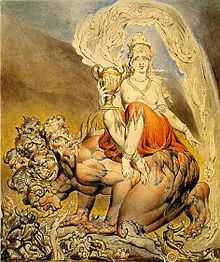
My conclusion in the dream is that my partner and I will have to do something else. What? Perhaps it’s time to go inward, reflect, gain a better understanding of ourselves, our needs, and what is truly important to us. What does one do when the veneer of civilization is peeled back to reveal the jungle lurking beneath the surface?
When Babalon calls – Know Thyself!
Laughing into the unknown
Laughing into the Unknown
living with metacrisis and collapse
Tea, Sympathy and Acceptance
Life Connections are Everything
Adventures in Practical Magick
By Tarotmum13 ~ Just a Tarot-mad mum writing about the things she loves - might be Tarot and Oracle cards, might be my little girl, might be crystals or pendulums, might be my cat!
I am not here to convince you of anything, I am just sharing my personal experiences
"I try, I may not always succeed, but I try"
Stories and photos from Scotland
Written by people in recovery for people in recovery
Happiness in intelligent people is the rarest thing I know. ~Ernest Hemingway
"...with a pen for a wand and a story for a spell..."
GoddessSchool.com ~ Healing Arts and Pagan Studies
A journey into the labyrinth of my sceptical mind.
Peace, Prosperity, and Blessings
Be stupid, Self-awareness, Equality
 Awakening the Witch